
The blaze erupted around 7 am in the gas processing plant of the ONGC located in Uran area of neighbouring Navi Mumbai, an official said.

But demand has shown signs of pick up in the last 10 days of April after the government allowed resumption of economic activity beyond the urban municipal limit.

Opposition members in the Lok Sabha on Monday blamed the Bharatiya Janata Party-led central government's policies for the price rise and accused it of ignoring the plight of common people, saying kitchens will soon "see a lockdown" if the Centre does not take corrective measures.
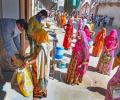
The government's subsidies on food, fertilisers and petroleum are estimated to decline by 39 per cent to Rs 4,33,108 crore this fiscal and fall further by 27 per cent to nearly Rs 3.18 lakh crore in 2022-23. In its revised Budget (RE) estimate for the 2021-22 fiscal, the government has pegged total subsidies to be at Rs 4,33,108 crore against the actual Budget estimate of Rs 7,07,707 crore in the previous financial year. Out of which, the food subsidy is estimated to decline to Rs 2,86,469 crore in the current fiscal from Rs 5,41,330 crore in 2020-21, while petroleum subsidy is estimated to fall to Rs 6,517 crore from Rs 38,455 crore in the said period.
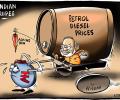
The Union government has collected Rs 94,181 crore through levy of excise duty on petrol and diesel in the first three months of the current fiscal on the back of a record tax on fuel that yielded 88 per cent higher revenue the previous financial year, the Lok Sabha was informed on Monday. Excise duty on petrol was hiked from Rs 19.98 per litre to Rs 32.9 last year to recoup gain arising from international oil prices plunging to multi-year low as pandemic gulped demand. The same on diesel was raised to Rs 31.8 from Rs 15.83 a litre, according to a written reply by Minister of State for Petroleum and Natural Gas Rameswar Teli in the Lok Sabha. This led to excise collections on petrol and diesel jumping to Rs 3.35 lakh crore in 2020-21 (April 2020 to March 2021), from Rs 1.78 lakh crore a year back, he said.

Strict lockdown-like restrictions are already in place in the southern stateand the Pinarayi Vijayan government decided to clamp the complete shutdown in the wake of severe spike in the positive cases.

From online frauds to LPG cylinder accidents, manufacturers and service providers give a host of covers.

Government-controlled oil-marketing companies (OMCs) have held back petrol and diesel price revisions for a week and are expected to continue doing so, ostensibly owing to political reasons. It appears that the Centre has informally conveyed to the three major OMCs to not revise fuel prices for the time being, two people in the government said. This informal directive follows the talks between the Centre and states on cutting taxes and bringing the auto fuels under the good service tax regime not fetching the desired results, so far.

State fuel retailers IOC, Bharat Petroleum and Hindustan Petroleum sell diesel, domestic LPG and kerosene at government dictated rates which are lower than cost of production.

The Cabinet has approved a framework of understanding on cooperation in hydrocarbons with Bangladesh recently.
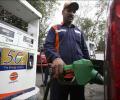
An increase in petrol, diesel, domestic cooking gas (LPG) and kerosene prices looks "imminent" after the Finance Ministry said it has no money to provide for fuel subsidy.

Petrol prices on Thursday crossed Rs 73 a litre mark, the highest level since the BJP government came to power in 2014, while diesel touched a record high of Rs 64.11 a litre.

The guidelines listed several services including government and private offices that will be out of bounds during the period, while exempting establishments such as hospitals, ration shops, dairies, banks, insurance offices, and print and electronic media. Delivery of all essential goods including food, pharmaceuticals, medical equipment through e-commerce has also been exempted from the purview of the lockdown.

The government on Thursday more than doubled the price of natural gas that is used to produce electricity, make fertilisers, turned into CNG and piped to household kitchens for cooking, on the back of a spike in global energy prices. The price of gas produced from old regulated fields, such as the nation's largest gas field of Bassein of ONGC, will rise to a record high of $6.10 per million British thermal unit (mmBtu) from the current $2.90 per mmBtu, according to the oil ministry's Petroleum Planning and Analysis Cell (PPAC). The new price, which is likely to result in a hike in CNG and piped cooking gas rates, will be for six months beginning April 1.

Petrol price can go down to Rs 75 a litre across the country if brought under the ambit of the Goods and Services Tax (GST), but there is a lack of political will, which is keeping Indian oil product prices at one of the highest in the world, economists at SBI said on Thursday.

The retail selling price of petrol at Delhi would come down by Rs 1.82 a litre.
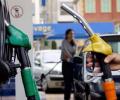
As the world's third-largest oil importer and consumer, India is running out of options as the relentless surge in international oil prices make it imperative to pass them on to consumers, officials said on Monday. India imports 85 per cent of its crude oil needs and about half of its natural gas requirement. While the imported crude oil is turned into fuels such as petrol and diesel, gas is used as CNG in automobiles and fuel in factories.
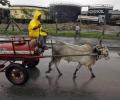
The kerosene subsidy is expected to decline by 40 per cent from Rs 7,595 crore in 2016-17 to Rs 4,500 crore this financial year.

According to sources, Russian energy giant Rosneft or its affiliates, Saudi Aramco and Reliance Industries are in race for BPCL's three refineries - Mumbai, Kochi in Kerala and Bina in Madhya Pradesh - 16,309 petrol pumps, 6,113 LPG distributor agencies and more than a fifth of 256 aviation fuel stations in the country.

'So you have welfare programmes, you reach out to the poor, you cut out the middlemen, you cut out the leakages and you try to raise the standard of living.'

National oil companies are staring at inventory losses as they have to bring down refinery throughputs because of the plunging demand for fuels following the nationwide lockdown to contain the deadly coronavirus infection. India is the world's third-largest energy consumer but the lockdown has shut businesses, suspended flights, stopped trains and brought almost the entire vehicular movement to a halt, impacting fuel demand.
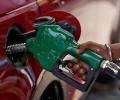
The ministry of petroleum and natural gas has granted seven authorisations to companies for selling automobile (auto) fuels in the country. These new approvals are under the relaxed guidelines for authorisation to market transportation fuels that were revised in 2019. This is expected to make the competition more intense in India's petroleum retail business. According to a top oil ministry official, a fresh marketing authorisation has been granted to Reliance Industries (RIL) under these norms. This is being done since RIL's existing retail marketing authorisation has been transferred to its subsidiary Reliance BP Mobility
Industry officials say the crunch has not only affected manufacturing of edibles but even of items like nozzle pumps and other goods used in packaging.
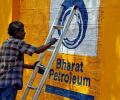
While the Union Cabinet had in November last year approved the sale of the government's entire 52.98 per cent stake in BPCL, offers seeking expression of interest (EoI), or bids showing interest in buying its stake, were invited only on March 7. The EoI submission deadline was May 2, but on March 31 it was extended up to June 13. On Wednesday, the government said this deadline is further being extended up to July 31.

Making a case for raising prices of diesel, kerosene and LPG, the Reserve Bank on Tuesday said hike in rates of petroleum products is necessary to arrest fiscal slippages.
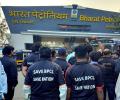
US private equity firm I Squared Capital is dropping out of the race to buy India's second-largest state oil firm, Bharat Petroleum Corporation Ltd (BPCL) owing to a complex deal structure and lack of financial backers for the transaction, sources said. I Squared Capital through its Indian arm, Think Gas was among the three suitors that had evinced interest in buying the government's near 53 per cent shareholding in BPCL. "The company has made a decision not to participate in the financial bidding," a source with direct knowledge of the development said.
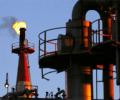
Indian basket at 6-month low of $49.11 a bbl
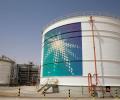
Estimated to cost $44 billion, the project was expected to be commissioned by 2025.

The government is keen to close the sale before March 31, 2021, to help meet a record Rs 2.1 lakh crore target which Finance Minister Nirmala Sitharaman has set from divestment proceeds in the Budget for 2020-21.
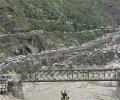
Indian Oil Corp, the nation's largest fuel retailer, positioned adequate stocks of all petroleum products -- petrol, diesel, kerosene and LPG in the state.

The company and other public sector fuel retailers Bharat Petroleum and Hindustan Petroleum are currently selling petrol at Rs 3.68 a litre below cost and diesel at Rs 2.90 per litre lower than cost.

As of now, tankers carry petroleum products from India to Nepal as part of an arrangement which is in place since 1973.
The government on Tuesday ruled out any rollback of last month's increase in prices of petrol, diesel and LPG, and said a policy for pricing of major petroleum products was under review.

Sale of diesel, the most consumed fuel in the country, fell 12 per cent, while petrol sales fell 7.4 per cent year-on-year to 2.38 million tonnes although it rose 5.3 per cent from 2.26 million tonnes in July as commuters preferred driving to using public transportation.

Dharmendra Pradhan, Mukhtar Abbas Naqvi, Nirmala Sitharaman and Piyush Goyal have been elevated to Cabinet ministers.
India's energy consumption profile is varied.
The new model, named M800 Duo will have dual fuel option of petrol as well as LPG, the company said in a statement. The new M800 will be available in two options--M800 Standard with LPG, priced at Rs 2.05 lakh ex-showroom Delhi and M800 AC LPG tagged at Rs 2,26,000.

In a discussion in Lok Sabha on the COVID pandemic, members called for ban on international flights in view of the outbreak of the Omicron strain and demanded that the government 'accept responsibility' for deaths of lakhs of people during the outbreak.
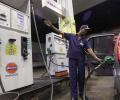
The demand, which had fallen by as much as 70 per cent, has since recovered after lockdown restrictions were eased beginning early May.

To young professionals I would say, work hard, play hard and not be constrained by fads like WLB, says Sudhir Bisht.
 © 2026 Rediff.com - Investor Information - Advertise with us - Disclaimer - Privacy Policy - Sitemap - Feedback - About us - Terms of use - Grievances